Car insurance in Dubai: why do quotes vary so much?
Private-car motor policies in the UAE are written on the same Central Bank wording and priced inside a regulated band. This explainer walks through what moves a quote inside that band and what to line up before you compare two prices.
Ask several insurers to quote the same car and the prices can be far apart, even though a private-car policy in the UAE uses one of two unified wordings issued under Insurance Authority Decision No. (25) of 2016, now kept in the Central Bank of the UAE rulebook, and the premium has to fall between a regulated minimum and maximum (taxis, rental cars and classic cars have their own rules in Article 2). What changes from one quote to the next is where the insurer sits inside that band, and which extras it has added. This guide reads the regulations and one insurer’s published key facts.
The regulator sets a floor and a ceiling
The price limits come from Insurance Authority Decision No. (30) of 2016 on motor tariffs, amended in 2017 and 2020 (CBUAE rulebook). It says insurers “are free to compete by offering tariffs within the limits” of its tables. The standard policy period is 13 months, and the premium already includes commissions and administrative charges (same decision, Article 3).
Third party cover is priced by body type and number of cylinders, not by the car’s value. Comprehensive cover has a fixed floor and a ceiling expressed as a share of the car’s value.
| Private vehicle | Cover | Minimum, AED | Maximum |
|---|---|---|---|
| Saloon, 4 cylinders | Third party | 750 | AED 1,300 |
| Saloon, 6 cylinders | Third party | 850 | AED 1,400 |
| Saloon, 8 cylinders | Third party | 950 | AED 1,600 |
| Saloon, more than 8 cylinders | Third party | 1,300 | AED 2,100 |
| Four-wheel drive, 4 cylinders | Third party | 1,000 | AED 1,750 |
| Four-wheel drive, 6 cylinders | Third party | 1,050 | AED 1,900 |
| Four-wheel drive, 8 cylinders | Third party | 1,100 | AED 1,950 |
| Saloon | Comprehensive | 1,300 | 5% of value |
| Four-wheel drive | Comprehensive | 2,000 | 7% of value |
Source for every row: Tables (1) and (2) of Decision No. (30) of 2016, for a 13-month period.
The car’s value moves the comprehensive price most
On a comprehensive policy the ceiling grows with the value you declare, the floor does not. Take a saloon insured at AED 80,000: the floor is AED 1,300 and the ceiling is 5% of value, so AED 4,000 (tariff tables). A four-wheel drive insured at AED 250,000 has a floor of AED 2,000 and a ceiling of 7%, which is AED 17,500 (same tables). Where you land in that band depends on the insurer’s own experience with its customers, which the decision makes each company answer for (Article 2). Declaring a lower value to cut the premium has a cost later, because the insured value is what a total loss pays out on.
Discounts the rules allow
The tariff decision lists the reductions an insurer may give, each as a share of the minimum premium (Article 2):
- No claim caused in the past year: 10%. Two years: 15%. Three years: 20%.
- Renewing with the same insurer: a 10% loyalty reduction.
- A vehicle running on gas or electricity: up to 25% at renewal.
- 50% off the minimum premium for workers in the medical sector, members of the armed forces, police and civil defence, people of determination, and people over 60. The list in the decision ends with “insurance applicants (individuals) with an accident-free records”, so ask the insurer whether a clean record is also required.
The claim-free, loyalty, fleet and gas or electric reductions are worded “the Company may grant”, so an insurer can decline them. The 50% reduction is worded “shall be granted”. When more than one reduction applies, only the highest counts. The same article obliges your current insurer to give you, free of charge, a certificate of your claims record for previous years.
The excess, and the extra share for drivers under 25
The excess (the amount you pay yourself on each claim you cause, or that an unknown person causes) is capped by the value of the car in Schedule (3) of the unified loss and damage policy:
| Private car value (up to 9 passengers) | Maximum excess per accident, AED |
|---|---|
| Up to AED 50,000 | 350 |
| AED 50,000 to AED 100,000 | 700 |
| AED 100,000 to AED 250,000 | 1,000 |
| Above AED 250,000 | 1,200 |
| Above AED 500,000 | 1,400 |
On top of that, the insurer may charge up to 10% of the claim when the driver is under 25, up to 15% on sports cars and modified vehicles, and up to 20% on cars modified outside the factory (same policy, Chapter Three). Orient’s published terms apply the under-25 share at the full 10% (key facts). As an illustration, a AED 12,000 repair on an AED 80,000 car with a 22-year-old at the wheel could leave the owner paying up to AED 700 plus up to 10% of the claim, which is AED 1,200 if the 10% is taken on the full bill (arithmetic on the excess table and the under-25 rule above, not a market quote). The extra percentages do not apply to a total loss (same policy).
Agency repair after the third year
Agency repair means the dealer’s own workshop fixes the car. Orient lists it as covered “up to 3 years” on its comprehensive plan (key facts). After the first three years on the road, the unified policy lets an insurer agree to agency repair if you ask for it when you sign, at a premium that still has to stay under the maximum tariff (loss and damage policy). Two quotes on a four-year-old car, one with agency repair and one with garage repair, are not the same product.
Ask for new original parts and you pay part of their invoice yourself: 5% in the car’s second year, up to 30% from the sixth (Schedule (1)).
What a total loss pays
When repairs would cost more than 50% of the car’s value before the accident, or the chassis or structural pillars need cutting or welding, the car is treated as a total loss. Where the car is lost or irreparable, or repairs pass that 50% mark, the payout starts from the insured value agreed in the policy, minus a 20% depreciation, and takes account of how much of the insurance period has run (loss and damage policy, Chapter Two). For the chassis and pillar cases the policy says compensation follows the value agreed in the policy (Chapter One). Check the value printed on the quote against what the car would cost to replace, on our Check a seller’s price page.
Riders that change the price
The unified loss and damage policy is written to cover damage in the UAE. Damage outside that territory, which would include Oman, and damage off the road both need a rider (loss and damage policy, Chapter Four).
Orient’s document shows what the extras look like in practice (key facts). Its comprehensive plan includes vehicle damage in Oman and off-road cover for 4x4s. Personal accident cover for the driver is optional at AED 60, a replacement car for up to 7 days costs AED 222 and for up to 14 days AED 365, all before VAT. The same document says the bank distributing the product earns a commission of up to 17.5% on comprehensive plans and up to 10% on third party plans.
Third party only: what it leaves out
Third party cover pays for damage you cause to others. It pays nothing for your own car. Property damage is capped at AED 2,000,000 per accident, and the owner of a private car you damage is entitled to a replacement car allowance of up to AED 300 a day for up to 15 days, unless they choose cash compensation (unified third party policy).
Lining up two quotes
Before you compare two prices, line up four things: the insured value, agency or garage repair, the excess, and the Oman and off-road riders. If the cheaper quote differs on any of them, part of the gap may be cover and not price, so compare like with like first. Get the quote on the exact model before you commit, because a four-wheel drive starts from a higher comprehensive floor than a saloon (AED 2,000 against AED 1,300, tariff tables). Ask your current insurer for the free claims certificate before you switch.
When you renew the registration in Dubai, the RTA checks that the insurance is valid for at least 6 months, including the grace period (RTA vehicle renewal).
Insurance is one line on the running-costs page, next to depreciation and fuel. To weigh two candidates, use compare or the budget tool.
If an insurer will not pay
Complain to the insurer in writing first. Sanadak, the ombudsman set up by the Central Bank, has handled insurance complaints since 7 March 2024 and its process is free of charge (CBUAE announcement). It can reject a case if the insurer has not had at least 30 complete business days to reply, or if the complaint is about the insurer’s internal pricing policy (ombudsman regulation, Article 4). So a quote you find too high is outside its remit, while a dispute over a claim is not excluded on that ground.
Sources
All pages opened on 8 October 2026.
- Insurance Authority Decision No. (30) of 2016, motor tariffs, current version: CBUAE rulebook
- Decision No. (41) of 2017 amending the tariffs (no-claims and loyalty reductions): CBUAE rulebook
- Unified Motor Vehicle Insurance Policy against Loss and Damage: CBUAE rulebook
- Unified Motor Vehicle Insurance Policy against Third Party Liability: CBUAE rulebook
- Orient Insurance motor key facts document, distributed by Mashreq: PDF
- RTA, vehicle ownership renewal service: rta.ae
- Central Bank of the UAE, launch of Sanadak: PDF
- Ombudsman Unit regulation, Article 4: CBUAE rulebook
How we work with external sources is set out on our methodology page.
Drafted with AI from our own data, every figure checked against its source, approved by the editor.
Related guides
What does a car really cost in Dubai each month?
We ran popular new cars sold in the UAE through our five-year cost engine, from the Mitsubishi Attrage to the Tesla Model 3, to see what owning one costs per month once depreciation, fuel, insurance and servicing are counted.
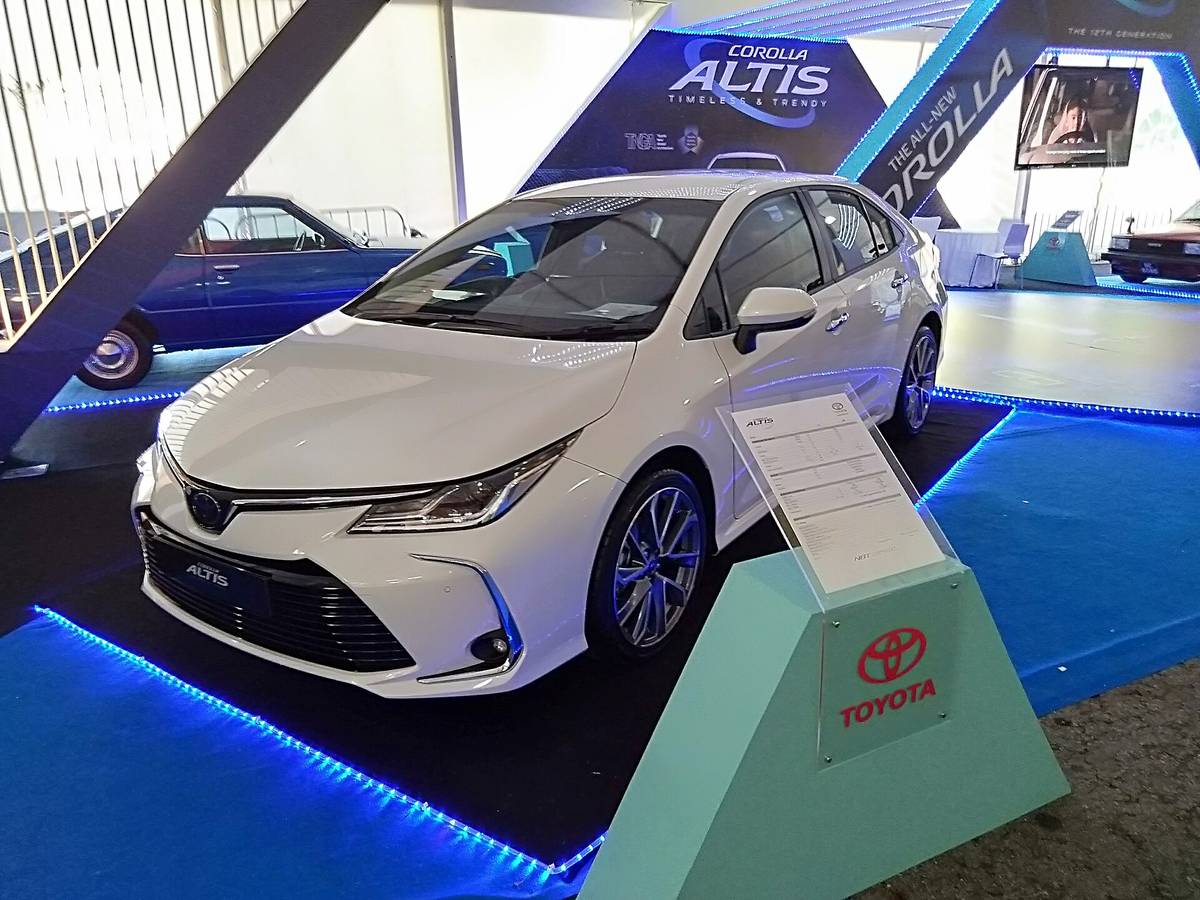
BYD Song Plus vs Toyota RAV4 Hybrid: which costs less over five years?
We put both family SUVs through our five-year cost engine. The RAV4 Hybrid gets a measured total, the Song Plus is too new on the used market to get one yet, and that gap is itself useful to a buyer.