Best cars by budget: how to use the shortlist tool
How the Cars Oracle budget shortlist picks and ranks UAE cars, what its monthly cost includes, what it leaves out, and how to turn it into a list of cars worth viewing.
The budget shortlist answers one narrow question: of the cars you can afford, which ones cost the least to own. You give it a budget. It returns every model whose price fits, sorted from cheapest to own to most expensive to own, with a monthly figure and a verdict next to each.
That is a different question from “which car should I buy”, and most of the mistakes people make with the tool come from mixing the two up. This guide goes through what the page puts in front of you, how a model ends up on it, which costs are inside the monthly figure and which ones you still have to add yourself. At the end there is a worked session and a rule you can use when you sit down with it.
What the shortlist shows you
The page opens with a row of budget buttons. Pick one and the table below redraws. The line above the table tells you how many models fit and confirms the budget you picked.
Each row is one model, and there are four columns.
| Column | What it means | Where to check it |
|---|---|---|
| Model | The make and model. The name is a link to that car’s running-costs page. | Running costs |
| Verdict | Yes, buy, Buy with care or Better avoid it: our written opinion on the model. | The model page under /uae/ |
| Per month | The average monthly cost of owning the car, depreciation included, before any loan. | The running-costs table for that model |
| 5-year cost | The same monthly cost carried across five years. | The running-costs table for that model |
The ranking uses the last column. The car at the top is the one the engine expects to cost you the least over time, on its default settings. It is not the best car in your price band, and the tool does not claim it is.
How a car gets onto the list
A model makes the list when either of two prices fits your budget: its new price, or the median asking price of its most recent model year on GCC-spec Dubizzle listings. The methodology page explains how those medians are built and why imports are left out of them.
Once a model is in, the engine works out several ways of owning it. Buying new is one. Buying used at each of the recent model years is another, and each fuel version of the car gets its own run (petrol, hybrid, electric where they exist). It keeps the cheapest route whose purchase price stays within your budget and whose data is solid enough to price both the purchase and the resale.
So a row on the list is not one specific car. It is the cheapest sensible way to own that model, according to the engine. To see which route it picked, click the model name. The running-costs page opens with a line that reads “Cheapest way to own it with these settings”, followed by either “buy new” or “buy a [year] model used” and the fuel type.
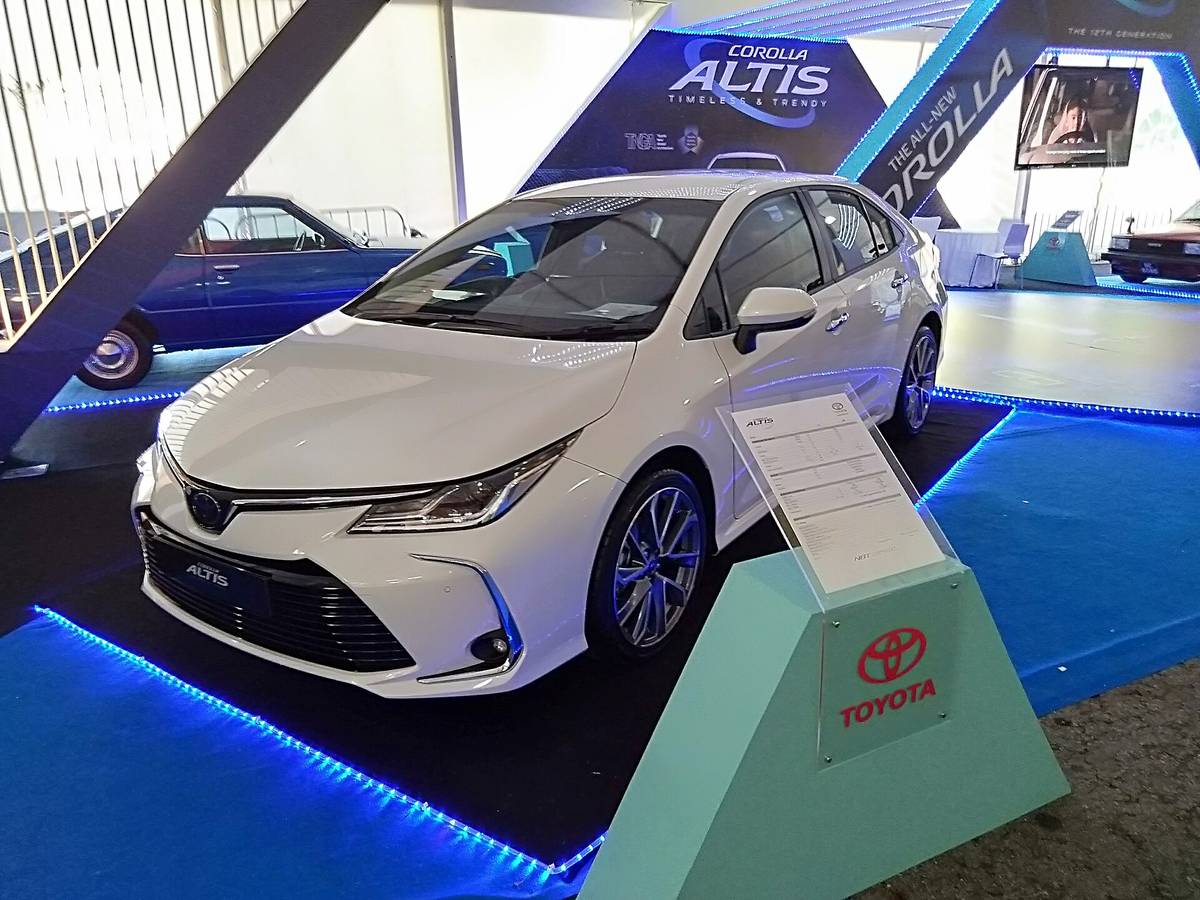
That line matters more than the monthly number. When we opened the page on 8 October 2026, the Toyota Corolla row was built on a used hybrid several model years old, not on a new car. If you want a new Corolla, the monthly figure in the shortlist is not your figure.
What the monthly cost includes
The monthly figure is the engine’s estimate of what owning the car costs on average, from the day you buy it to the day you sell it again. It adds these lines:
- Depreciation. The gap between what you pay and what you get back when you sell. For a used car the engine starts from the asking price on listings minus a small allowance for negotiation. For the resale it takes the asking price of the same car, older and with more kilometres, minus a discount for selling to a dealer or accepting a lower offer. Asking prices are not sale prices, which is why both adjustments exist.
- Insurance. Estimated from the car’s value as it falls year by year, plus an allowance for claims.
- Maintenance and repairs. The service schedule (dealer prices while the warranty runs, independent garage prices after), tyres, brake pads, the battery, a repair reserve that grows once the warranty ends, and a cost for days the car spends off the road.
- Fuel or charging. Litres per 100 km times your monthly distance times the pump price. The tool currently uses AED 4.28 a litre, the Special 95 price shown on ADNOC Distribution’s fuel page when we checked on 8 October 2026. When the pump price changes, this line moves with it.
- Registration. The yearly renewal, plus the one-off registration or transfer and inspection fees at purchase.
- Capital cost. Shown as “Other” in the table. The money sitting in the car could have earned something in a savings account, and the engine counts what it gives up.
The distance driven is a default. On the running-costs page you can change the kilometres per month and watch the fuel, tyre and depreciation lines move. Someone commuting from Sharjah to Jebel Ali drives a very different car, in cost terms, from someone doing school runs inside Al Barsha, even if the badge is the same.
What the monthly cost leaves out
Some costs are not in the number, and on a tight budget they can be large enough to change your shortlist.
Salik tolls
The owner cost in the tool has no Salik line, so the running-costs table shows no Salik row. That is a gap in the tool, not a sign that tolls are zero.
Dubai’s tolls depend on the time of day. Under the schedule Salik filed with the Dubai Financial Market, a weekday crossing costs AED 6 in the peak hours (6am to 10am and 4pm to 8pm), AED 4 off-peak, and nothing between 1am and 6am. On Sundays outside holidays and events it is AED 4 all day, still free overnight (Salik disclosure to DFM).
If your commute crosses one gate each way during peak hours, that is AED 12 a working day on top of the monthly figure, by the same schedule. Count your own gates.
Loan interest
The shortlist assumes you pay cash. There is no interest in the monthly figure, and the running-costs table shows no Financing row.
If you are borrowing, the UAE Central Bank’s rules set the frame. A bank can lend up to 80% of the value of the car, and the loan must be repaid within 60 months (CBUAE Rulebook, Regulation 29/2011, Article 3). Car loans also sit inside the overall limit that keeps all your loan repayments within 50% of gross salary and regular income (CBUAE clarifications to Article 3).
The 80% ceiling means a financed car still needs at least 20% of its price in cash on the day. And your budget in the tool should be the price you can pay, deposit plus loan, not the monthly instalment you can manage.
Fuel grade
The fuel line assumes Special 95. If the manual for the car you like asks for Super 98, ADNOC lists that at AED 4.40 a litre, against AED 4.28 for Special 95 (ADNOC Distribution). On a small saloon the difference is minor. On a thirsty V6 doing long commutes it adds up over a few years.
Everything else
Parking permits, traffic fines, window tint, car wash subscriptions and accessories are not in the number. Neither is the time you spend selling the car. None of these change much from one model to the next, which is why the ranking still holds without them, but your real monthly spend will sit above the figure in the table.
Why a bigger budget barely changes the top of the list
Move from a small budget to a large one and the first rows of the table look almost the same. People often read that as a bug.
The reason follows from how the list works. A larger budget lets more models in, but it does not push the cheap-to-own cars out. A small used saloon that is cheap to run and holds its value is cheap to own whether your budget is small or large. On 8 October 2026, the Mitsubishi Attrage, Kia Pegas and Nissan Sunny sat near the top at every budget from AED 60,000 up, and the Toyota Yaris joined them from AED 80,000. The smallest budget button is too tight to show this: very few models fit under it.
If you have a large budget and you are looking at a mid-size SUV, those rows are noise. The useful move is to decide your body type and size first, then scroll down past the small saloons to the cars in your class and read the order among them.
The verdict column needs the same care. The list ranks by cost, and cost alone does not say whether a car is a good buy. On 8 October, at the AED 80,000 budget, the Nissan Sunny and the MG MG5 both sat in the top ten with a Caution verdict next to them, while the Jeep Compass, with an Avoid verdict, came last. A low running cost on paper is no help if the car keeps going back to the dealer, and that is what the verdict is there to flag. Read why a Caution was given before you treat the rank as a recommendation.
Rows that are estimates
Some models reach the shortlist with thin data behind them. This happens most with brands that arrived in the UAE recently, because there are few older model years on the market to show how the car loses value.
When that happens the engine still computes a cost, but it cannot find a route it trusts. On the running-costs page those models carry a warning that begins “Estimate only: no eligible ownership route for this model (data too thin)” and goes on to say the figure is the cheapest scenario the model can compute. The shortlist table itself does not show that warning yet.
On 8 October several of these sat near the top of the list at the higher budgets: the BYD ATTO 3, the OMODA C5, the Geely EX5 and the Chery Tiggo 9 among them. Their position comes from resale values the engine had to project rather than read off the market. They may turn out to be cheap to own. The data does not tell us yet.
Before you put a high-ranked model on your viewing list, open its running-costs page and look for that line. If it is there, treat the rank as unknown, not as a strength. Our Chinese cars page covers the brands where this comes up most.
A worked session at AED 80,000
Here is how the tool is meant to be used, start to finish. Say you have AED 80,000 in cash, two children and a commute down Sheikh Zayed Road.
- Open the budget shortlist and pick the 80k button.
- Skip the city saloons at the top. With two child seats and a boot full of shopping, you want a compact SUV or larger.
- Scroll and note the compact SUVs with a Buy verdict. On 8 October they included the Mazda CX-30, the Suzuki Grand Vitara and the Toyota C-HR.
- Click each name. Check the route line (new or used, which model year, which fuel) and look for the “Estimate only” warning. Write down the model year the engine picked.
- Put the three side by side in the compare tool. It shows each cost line next to the others, with the cheaper figure in bold, so you can see whether one car wins on depreciation and loses on fuel.
- On the running-costs page, change the kilometres per month to your real figure. A long daily commute can flip the order between a hybrid and a petrol car.
- Add your Salik crossings and, if you are borrowing, your loan interest, using the figures in the section above.
- Take the model year from step 4 to the Check a seller’s price page. It gives you the range of asking prices for that model and year, adjusted for mileage, so you know what a reasonable listing looks like before you call a seller.
- Check live deals for dealer listings priced well under comparable cars. The list is rechecked every 30 minutes and a listing is removed once it has gone from Dubizzle (methodology), so confirm with the seller that the car is still available.
Most of the value is in steps 4 and 8. The shortlist narrows the field. The route line tells you which car to look for, and the price range on that page tells you what to pay for it.
What this means if you are buying
Use this rule. From the shortlist at your real budget, keep the three cheapest-to-own models in the body type you need that have a Buy verdict and no “Estimate only” warning. Look for the model year the engine picked for each, and make offers inside the asking-price range for that year. If no model in your class meets all three conditions, raise the budget one step or accept a Caution verdict after reading why it was given, not before.
If you will keep the car much longer than most people do, depreciation weighs less and running costs weigh more, so check the maintenance line on each running-costs page. If you need a new car, for the warranty or because of a company policy, ignore the used routes and compare new prices in the compare tool.
Sources
- Fuel prices (Special 95 and Super 98), read on 8 October 2026: ADNOC Distribution, consumer fuel prices
- Salik variable toll schedule: Salik PJSC general disclosure to the Dubai Financial Market, 29 November 2024
- Car loan ceiling and repayment period: CBUAE Rulebook, Regulation 29/2011, Article 3 (Car Loan)
- Car loans within the salary limit: CBUAE Rulebook, clarifications and guidelines, Article 3 (Car Loan)
- How the market medians, verdicts and running-costs engine work: Cars Oracle methodology. The shortlist examples in this guide were read on 8 October 2026, from the listings sweep dated 7 October 2026.
Drafted with AI from our own data, every figure checked against its source, approved by the editor.
The cars in this guide
Related guides
Which SUVs can you find under AED 40,000?
Every SUV model year since 2016 whose median asking price on Dubizzle fits the budget, with the kilometres that come with it.

UAE used car market, October 2026
What is for sale on the UAE used car market this October: how many cars are listed, the median GCC-spec asking price, which brands and models fill the market, and how to use that when you buy.